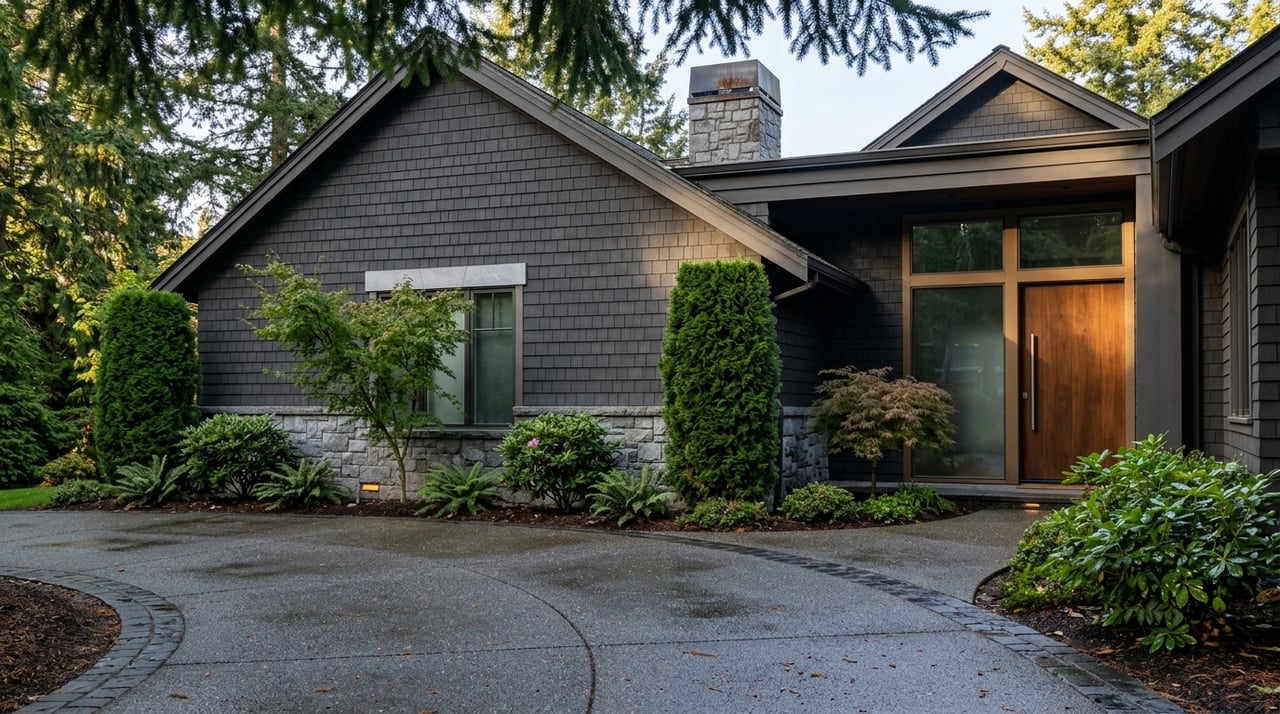
Trying to choose between Medina and Clyde Hill? If you are narrowing your search to Eastside enclaves with estate-scale homes, privacy, and close access to Bellevue and Seattle, this is one of the most common comparisons to make. The good news is that both communities offer a small-city feel and a highly residential setting, but they deliver that experience in different ways. This guide will help you compare lifestyle, lot patterns, transit access, schools, and overall feel so you can decide which setting fits you best. Let’s dive in.
Medina vs. Clyde Hill at a Glance
If you want the shortest answer, Medina leans more waterfront, private, and legacy-estate in character. Clyde Hill leans more compact, low-rise, and transit-connected while still offering large residential lots.
Both are small Eastside cities in the Bellevue area. Medina has just over 3,200 residents and is defined in part by its Lake Washington setting. Clyde Hill has 3,110 residents on 0.99 square miles, and the city emphasizes preserving its beauty and residential character. Clyde Hill also reports a 2023 median home value of $3.743 million.
Medina’s Identity: Waterfront and Privacy
Medina stands out for its direct relationship to Lake Washington. The city describes itself as a Lake Washington community between Bellevue and Seattle, and its shoreline planning documents note about 4.5 miles of waterfront and roughly 109 acres of shoreline jurisdiction.
That shoreline is also a major part of Medina’s market identity because nearly all of it is residential and privately owned. If you are looking for a setting where water adjacency, private shoreline, and estate-style privacy matter, Medina has the stronger official foundation for that story.
Medina also supports a lower-density, more natural residential feel. City planning materials say the community developed with large lots and slow incremental growth, and that many streets were built without curb, gutter, or sidewalks. That pattern contributes to a quieter, more tucked-away experience.
Clyde Hill’s Identity: Compact and Residential
Clyde Hill offers a different version of Eastside prestige. It is also small and residential, but its public-facing identity centers more on preserving residential character than on waterfront living.
The city’s code reinforces that feeling. In the R-1 district, single-family homes are the baseline use, the minimum lot area is 20,000 square feet with 100 feet of frontage, building height is capped at 25 feet, and structural coverage is capped at 30 percent. For you as a buyer, that translates into a consistently low-rise and estate-scaled environment.
While Clyde Hill is not described by the city in shoreline-first terms, it can still appeal if you want a polished, established residential enclave close to Bellevue and SR 520. The setting feels more compact in structure, with a strong emphasis on orderly residential form.
Comparing Lot Sizes and Home Settings
If lot size is high on your list, both cities deserve attention. The difference is that Medina shows a wider range in its planning documents, while Clyde Hill presents more uniform baseline standards.
Medina’s average lot size is about 20,000 square feet, according to city planning materials. Medina Heights averages about 15,000 square feet, while subdivision minimums in some zoning districts increase to 32,000 square feet in R-16, 40,000 square feet in R-20, and 60,000 square feet in R-30.
Clyde Hill’s R-1 minimum lot area is 20,000 square feet. That creates consistency, especially if you prefer a neighborhood where estate-scale lots are the standard rather than part of a broader mix.
In practical terms, Medina may suit you if you are drawn to a broader range of larger-lot opportunities and a more organic legacy-estate feel. Clyde Hill may suit you if you want predictability in low-rise residential form and lot standards.
Which City Feels More Private?
Privacy is one of the clearest distinctions in this comparison. Medina has the stronger official privacy language in city documents.
Its shoreline master program states that shoreline access must be balanced to protect private property and individual privacy. Combined with the fact that nearly all shoreline is residential and privately owned, Medina has a more direct case for buyers who place a premium on seclusion and private water-oriented living.
Clyde Hill can also feel private, but the case is different. Its privacy comes more from low-rise zoning, generous lot requirements, and a consistently residential layout rather than from shoreline regulations or a waterfront framework.
Schools and In-City School Access
Both Medina and Clyde Hill are within Bellevue School District. That means your comparison is less about district differences and more about which city has school options within its own boundaries.
Medina’s city page lists Medina Elementary, along with nearby private options including St. Thomas School and Bellevue Christian’s Three Points Elementary. Clyde Hill’s city page lists Clyde Hill Elementary, Chinook Middle School, Sacred Heart School, and Bellevue Christian School.
On paper, Clyde Hill has the denser in-city school stack because it includes both an elementary and a middle school within the city limits. Medina’s school identity is more closely tied to its elementary school and nearby private options.
Commute Access and Daily Convenience
For many buyers, this is where the choice becomes more practical. Both cities benefit from strong SR 520 access, but they connect to transit a little differently.
Medina says one King County Metro route directly serves residents via 84th Avenue NE, and the Evergreen Point Freeway Station on SR 520 provides access to 12 bus routes and about 50 park-and-ride spaces. City planning materials also state that nearly all Medina homes are within a half-mile of one of the city’s two main transit corridors.
Clyde Hill’s transit page identifies the Clyde Hill/Yarrow Point Transit Station at SR-520 and 92nd Avenue NE as the primary Seattle-bound transit connection. The city lists Metro and Sound Transit routes including 249, 255, 271, 542, 545, and 556.
If your routine depends on easy transit-node access, Clyde Hill has the clearer transit-station story. If you want a more waterfront-centered setting while still keeping strong SR 520 access in reach, Medina offers that balance.
Parks and Waterfront Access in Medina
Medina has a few specific amenities that reinforce its water-oriented identity. The city operates Medina Beach Park, which includes 50 feet of sandy beach and a dock.
The city’s parks page also lists city docks at Lake Lane and 84th Avenue NE. For buyers who care about living in a community where the public realm still reflects a lakefront setting, those details matter.
Clyde Hill’s comparison strength is not a waterfront amenity narrative. Its appeal is more about residential consistency, location efficiency, and a low-rise estate environment.
Who Medina Fits Best
Medina may be the better match if you want:
- A stronger Lake Washington identity
- A more established waterfront and shoreline narrative
- Private property emphasis and a stronger privacy framework
- A broader range of lot sizes, including larger zoning minimums in some districts
- A natural, low-density setting with a more tucked-away feel
For many buyers, Medina is less about simple convenience and more about the experience of place. If waterfront presence, privacy, and legacy character are central to your search, Medina often rises to the top.
Who Clyde Hill Fits Best
Clyde Hill may be the better match if you want:
- A compact Eastside enclave with a highly residential feel
- Consistent low-rise zoning and estate-scale lot standards
- Strong Bellevue and SR 520 connectivity
- Transit access centered around a clear station node
- In-city access to both elementary and middle school options
For some buyers, Clyde Hill offers the cleaner day-to-day layout. It can feel especially compelling if you want prestige and privacy without prioritizing a waterfront identity.
The Real Decision: Lifestyle Emphasis
When buyers compare Medina and Clyde Hill, the real question is usually not which is more desirable. Both are highly established Eastside enclaves with strong residential appeal.
The better question is what kind of daily experience you want. Medina emphasizes waterfront identity, privacy, and a more organic estate character. Clyde Hill emphasizes compact residential scale, low-rise consistency, and practical transit convenience.
If you are buying at this level, those distinctions matter. They shape not just the home you choose, but how the setting feels every day, from commute patterns to neighborhood rhythm to the kind of privacy and landscape you experience around the property.
If you are weighing Medina against Clyde Hill and want a discreet, fact-based perspective on which enclave best matches your goals, Patricia Wallace offers principal-led guidance shaped by deep experience across the Eastside’s premier residential markets.
FAQs
What is the main difference between Medina and Clyde Hill?
- Medina is more strongly defined by Lake Washington, shoreline privacy, and a waterfront estate feel, while Clyde Hill is more strongly defined by compact residential scale, low-rise zoning, and transit convenience near SR 520.
Which city has larger lots, Medina or Clyde Hill?
- Medina shows a wider range of lot sizes in city planning documents, with an average around 20,000 square feet and some zoning districts requiring 32,000 to 60,000 square feet, while Clyde Hill’s R-1 minimum lot size is 20,000 square feet.
Which city feels more private, Medina or Clyde Hill?
- Medina has the stronger official privacy framework because its shoreline policies specifically reference protecting private property and individual privacy, while Clyde Hill’s privacy comes more from low-rise single-family zoning and estate-scale lots.
Are Medina and Clyde Hill in the same school district?
- Yes. Both cities are within Bellevue School District.
Which city has better in-city school access, Medina or Clyde Hill?
- Clyde Hill has more in-city school options listed by the city, including an elementary school and a middle school, while Medina’s school identity is centered more on Medina Elementary and nearby private options.
Which city is better for transit access, Medina or Clyde Hill?
- Both have strong SR 520 access, but Clyde Hill has a more transit-node-oriented setup through the Clyde Hill/Yarrow Point Transit Station, while Medina’s transit story centers on corridor access and proximity to the Evergreen Point Freeway Station.