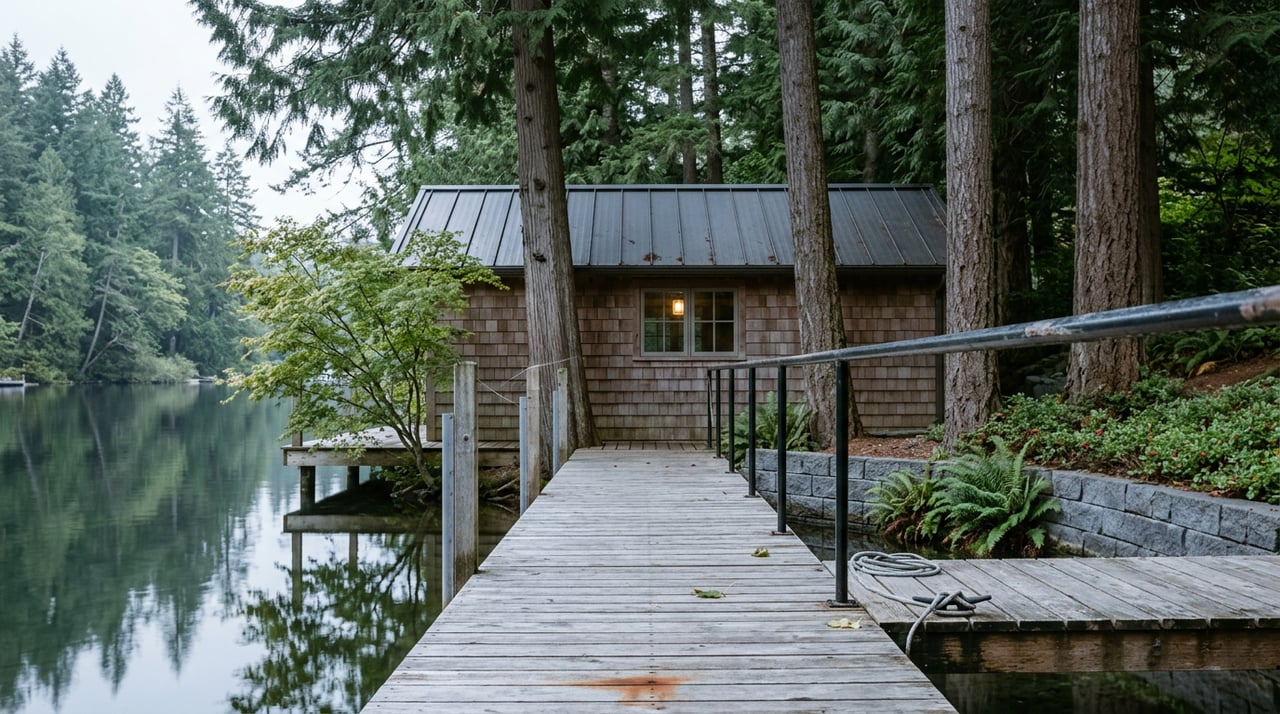
If you've launched a kayak from the ramp near the swim beach this summer, or sat on the fixed pier at Luther Burbank Park watching the ferry traffic across the lake, you've been standing on infrastructure built the same year Mercer Island's population was still counted in the low twenty thousands. The docks at Luther Burbank went in back in 1974. In two weeks, that changes.
The City of Mercer Island has set August 31 as the last day to reserve Picnic Area A or B at the park before construction begins on the Luther Burbank Docks and Adjacent Waterfront Renovation and Upgrade Project. Once that date passes, the fixed piers, the current dock configuration, and a stretch of shoreline access most Islanders have never thought twice about start coming down. This isn't a cosmetic refresh pushed by a design committee. It's a structural replacement that's been years in the making, and understanding why it's happening now tells you something real about how this park has quietly outgrown its own footprint.
Fifty-Two Years Is a Long Time for a Dock
A 2020 underwater survey of the Luther Burbank docks found rot in the structural members and loose bracing throughout. The engineers who inspected them gave the piers a life expectancy of less than five years from that point. We're now past that window. The fixed-height piers were designed for a different era of lake recreation, one built around larger, stationary boats rather than the kayaks, paddleboards, and small sailboats that dominate the water off Mercer Island today. City planning documents are blunt about the mismatch: the existing facilities don't serve current boating needs, and repairing the excess fixed piers isn't considered a good use of capital funding going forward.
So the city is replacing rather than patching. The plan calls for floating docks on the south side sized for boats 26 feet or under and non-motorized craft, a new overwater platform for viewing and lake access, an expanded cobble beach with an accessible route, and renovated restrooms and a concession stand tied to the water's edge. The Boiler Building, a brick structure that's stood on the site for decades, is being stabilized and repurposed as a small-craft boating activity center rather than left as storage. Phase one of that work already wrapped in 2024, with a new roof, seismic retrofits, and a rooftop deck completed with support from the Washington State Historical Society's Heritage Capital Projects program.
What the Funding Says About the Plan
Money tells you what a project actually is, more reliably than a press release does. This one draws from the Washington State Recreation and Conservation Funding Board, the U.S. Department of Fish and Wildlife, and the King County Flood Control District. A separate federal Boating Infrastructure Grant, awarded specifically for the north pier component, covers 75 percent of that piece's roughly $505,000 cost, with the city covering the remaining quarter.
That mix of funders is worth sitting with for a second. A flood control district and a fish and wildlife agency don't typically write checks for boater convenience. Their involvement points to what the master plan is really organized around: shoreline habitat and accessible water contact, not just moorage. The floating docks and expanded beach aren't simply a nicer version of what's there now. They're a shift from a boat storage model toward a public water-access model, which matches how people actually use Luther Burbank's shoreline on a Tuesday evening in August far better than a row of fixed piers built for 1970s recreational boating ever did.
The Season Already Peaked. Here's What's Actually Left.
This month already delivered the park's marquee nights out. Wooden O's free run of Macbeth closed its Luther Burbank stretch on August 16, the last of four 6 p.m. shows that followed a 7 p.m. performance on August 7 and nine earlier dates in July. The city's BAT and Beaver Night wildlife program had its evening at the park on August 6. Both are done for the year.
What's still open between now and construction is narrower, and more useful to know about.
- Reserve a picnic table before August 31. Area A and B rentals run $175 a day for groups of 50 or fewer, normally bookable through September 30, but this year the window closes early because construction on that stretch of shoreline begins once August ends.
- Pull up the STQRY app while the site still looks the way it has for fifty years. The Mercer Island Arts Council's self-guided tour covers more than 30 entries tied to the park's public art and history, including pieces in the Greta Hackett Outdoor Sculpture Gallery. Walking it now means seeing the Boiler Building and dock area before the renovation changes the ground underneath them.
The Wetlands Are the Part Most People Miss
None of this construction touches the park's north and south wetlands, and that's worth knowing because those wetlands are doing more work than most visitors realize. Luther Burbank sits on three-quarters of a mile of Lake Washington waterfront, and the undeveloped sections at either end of the park support 135 species of birds and 50 species of waterfowl, along with raccoons, beaver, muskrats, tree frogs, and rabbits. That's not a marketing description. It's the same reason the U.S. Fish and Wildlife Service is a funding partner on the dock project in the first place. The habitat value here isn't incidental to the renovation. It's a large part of why the renovation looks the way it does.
The swim beach, meanwhile, keeps getting tested. King County has monitored water quality at Luther Burbank's beach every swimming season since the city started its own parallel testing program in 2003, and results have consistently run low on bacteria. That's a two-decade track record most residents have never had a reason to look up, but it's part of what makes this a park people actually get in the water at, rather than one they just walk past.
Why This Particular August Matters
Parks change slowly enough that most of us stop noticing until something forces the issue. Fifty-two-year-old docks reaching the end of their structural life is that kind of forcing event. The version of Luther Burbank you've known, fixed piers and all, has about two more weeks left. What replaces it isn't a downgrade. It's the city catching up to how people already use the shoreline, backed by habitat funders who clearly think the wetlands are worth building around rather than working past.
If you've got a picnic planned, or just a walk you've been meaning to take before the site looks different, the next two weeks are the window.
I live and work in this part of the Eastside, and I like knowing the small civic details as much as I like knowing the market ones. If you're curious about what else is changing along the Mercer Island shoreline this year, or you just want to talk about the island itself, reach out to Patricia Wallace. I'm always glad to talk about the parks and the water here, not only the real estate around them.