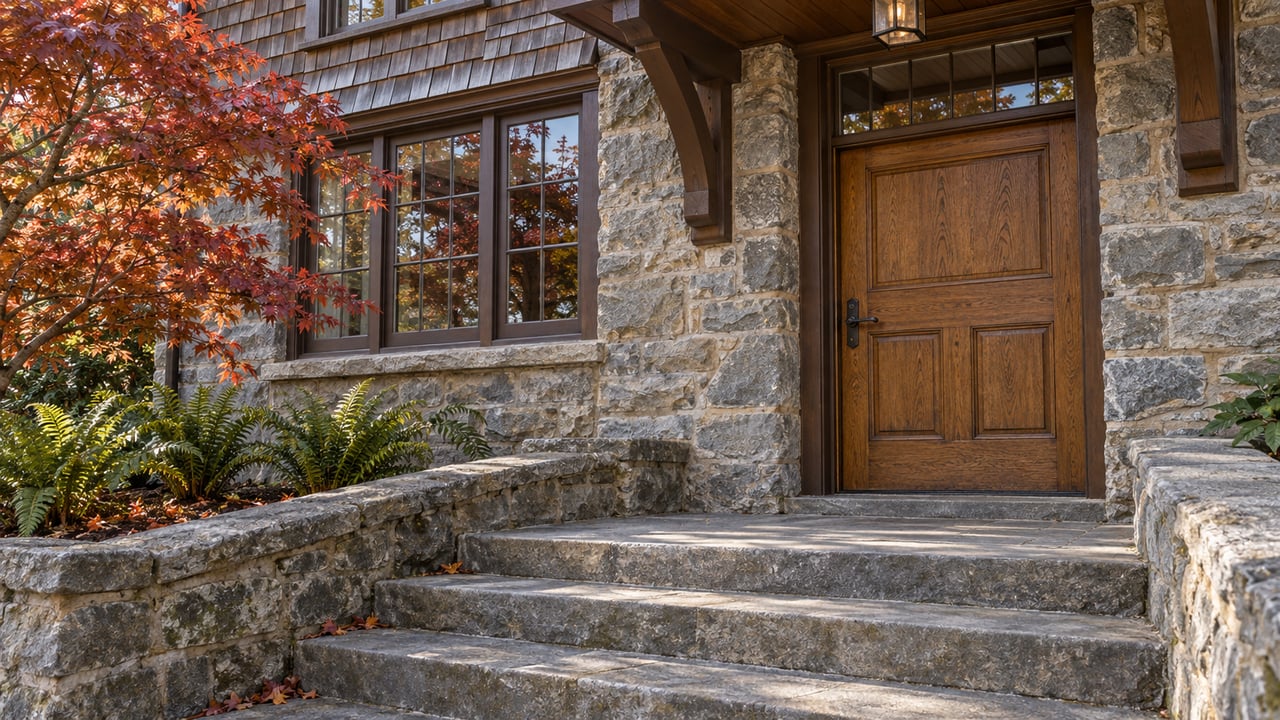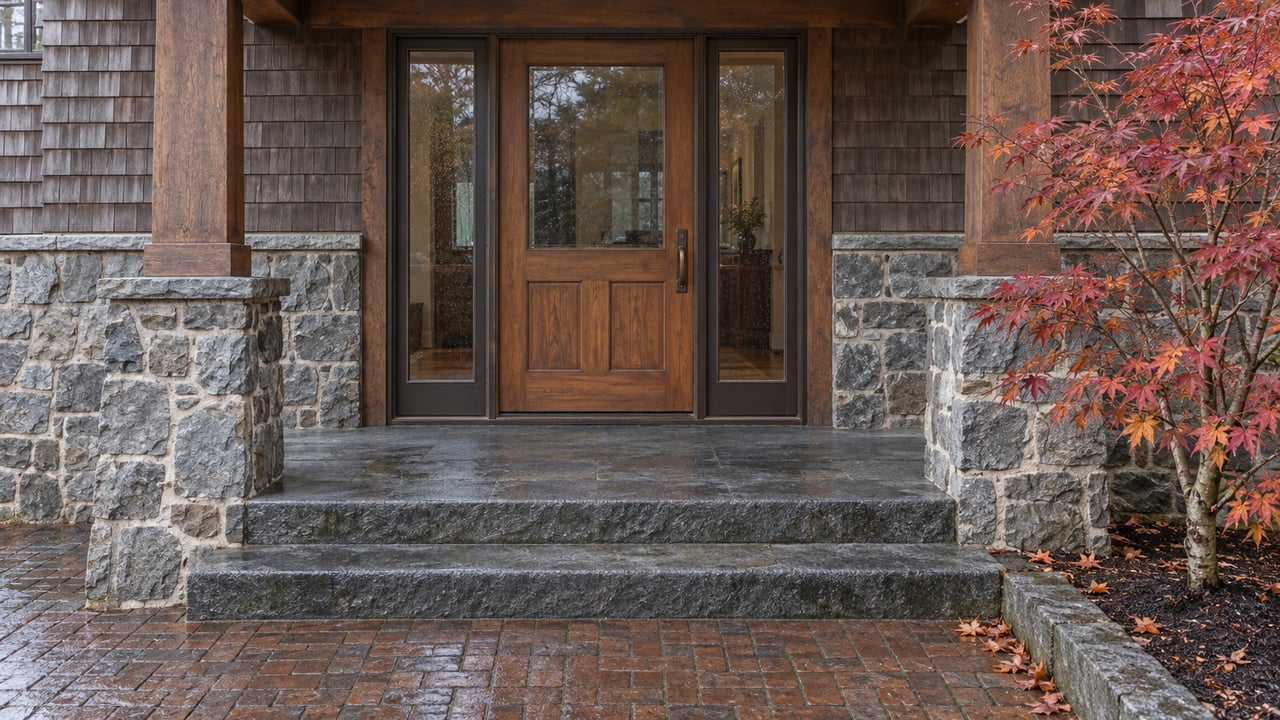
"Listening to the stone." That is how master stonemason Suminori Awata described his method to the North American Post, explaining a technique in which hand-split stones are stacked without mortar. He also said he hoped the new wall at the Seattle Japanese Garden would become "a symbol of this garden," and he compared its mix of differently shaped stones to human society.
The wall was finished on September 10. Four days later, Awata and most of the Green Man Builders crew left Seattle. Washington Park now has a structure designed to stand for centuries, and it is debuting in an autumn when nearly everything around it is still changing. The path beside it is incomplete. A key Arboretum trail is closed. The organization running the grounds is in its first year. The new wall is the one finished piece, and that is why this fall is the time to see it.
A Wall Meant to Outlast Its Audience
The Seattle Times reported in April that the project would replace a deteriorating basalt retaining wall with a granite wall built in the dry-stone ishigaki style, along with new stairs, accessibility work and restoration planting. According to the North American Post, the replacement stones came from the greater Cascadia region. Awata worked alongside Green Man Builders, a California-based masonry company.
The Garden calls the project a $2.8 million investment. Awata is described as a 15th-generation master stonemason and one of the last remaining practitioners of a lineage that builds walls for castle foundations, temples and gardens. Without mortar, these walls are designed for stability and earthquake resilience. In the Garden's words, "These walls stand for centuries."
"A rare opportunity to bring authentic Japanese stone masonry to Seattle." Michele Finnegan, interim superintendent of Seattle Parks, in the Seattle Parks announcement of the closure
The new layout uses parallel walls with stairs between them and an accessible route running below, all meant to form a continuous ADA pathway loop. The wall itself is complete. The loop is not.
Finished Stone, Unfinished Ground
Project lead Kyle Schlagenhauf of Green Man Builders is now leading the remaining crew on the accessible pathway at the north end of the central pond. The Garden has published no separate completion date for that path. The Arboretum Foundation gives only a broad construction window of June through November 2026.
That leaves the Garden roughly 80 percent open for the rest of the season, with construction closures and noise at the north end. The Garden's own advice is that visitors looking for quiet, contemplative time will find it in the southern portions. This follows a five-week full closure from June 22 to July 27 that many neighbors will remember.
The renderings also show a viewing pavilion behind the wall, credited to Berger Partnership and Hoshide Wanzer. That pavilion is a future phase. A schematic design for the north section is done, but no construction or completion date has been published.
The Garden's calendar shows the usual December through February winter closure and lists March operating hours. No 2027 reopening date has been announced, and nothing confirms that the north end will be fully open when the gates reopen. For anyone who wants to see the new granite with this year's maples, the window has a hard end date.
Maple Season Inside a Construction Season
Hatsumomiji, the Garden's maple viewing period, runs October 1 through 12. It comes with a maple brochure and children's scavenger hunts. The Garden describes the tradition as appreciating the changing colors day by day. This year, that daily change happens next to a wall that just went up.
The remaining calendar keeps getting shorter:
- Through October 12: Hatsumomiji maple viewing.
- Saturday, October 10: Family Saturday, with an all-ages origami workshop led by Puget Area Paperfolding Enthusiasts Roundtable, or P.A.P.E.R., from 11 a.m. to 2 p.m.
- October hours: Tuesday through Sunday, 10 a.m. to 5 p.m.
- November hours: Tuesday through Sunday, 10 a.m. to 4 p.m., with final entry 45 minutes before closing and the Garden closed Mondays.
- November 29: Last day of the 2026 season.
At the booth, admission is $10 for adults ages 18 to 64, $6 for youth, seniors, students and listed discount groups, and free for children 5 and under. Membership includes early access to special-event ticket sales such as Moon Viewing. The Garden's current listings show no 2026 Moon Viewing date.
The Same Pattern Runs Across the Arboretum
Outside the Garden's gate, the Arboretum is going through a similar fall, with the permanent and the provisional side by side.
The largest change is administrative. In January, the Arboretum Foundation and UW Botanic Gardens agreed to combine operations under one nonprofit, Seattle Botanic Gardens. The Foundation board approved the agreement on January 6, 2026, and the UW Board of Regents approved it on January 8. The new organization runs the 230-acre Washington Park Arboretum, the Seattle Japanese Garden and the Center for Urban Horticulture. It was still conducting a national search for its first CEO when the agreement was announced. The September 19 fall plant sale at Graham Visitors Center was the first held under the new name, and it raised more than $4,300.
The second change is physical. Phase 1 of the Washington Park Arboretum Waterfront Trail restoration covers the floating walkway on Foster Island. Part of the trail is closed during construction, and Phase 1 is expected to open in early 2027. The marsh walk will not be available this autumn.
What has not changed is the collection. UW Botanic Gardens directs fall visitors to the Woodland Garden, just off Azalea Way, which holds more than 70 Japanese maple cultivars, including 'Shishigashira,' 'Scolopendrifolium' and 'Seiryu.' It also points to redvein enkianthus, witch alder, sourwood and Japanese spicebush. Its general guidance says Japanese maples typically peak in September and October, larches from late September to mid-October, and mountain-ash color runs through October and November. These are typical windows, not a 2026 forecast, but they line up with the Garden's last full month of the season.
A Route That Fits the Shorter Days
With hours dropping and the north end of the pond fenced off, this order makes the most of a single afternoon:
- Start at the Seattle Japanese Garden and walk the quieter southern paths first. Then look north toward the new granite wall from wherever the closure lines allow.
- Head to the Woodland Garden off Azalea Way for the main concentration of Japanese maples in the Arboretum.
- Visit the J.A. Witt Winter Garden or the witch hazel family area east of the Pacific Connections Garden, where witch hazel leaves typically color in October.
- Finish at Graham Visitors Center, which posts hours of Tuesday through Sunday, 10 a.m. to 4 p.m. Its exterior-access restrooms are listed as open daily from 9 a.m. to 5 p.m. The Center notes that staffing can change its hours.
For a guide, UW Botanic Gardens' final free public tour of 2026 is on Thursday, November 5, from 11:30 a.m. to 1 p.m. It starts at Graham Visitors Center and focuses on autumn color. The calendar also lists a paid Arboretum walk on November 14, at $20 for the first ticket and $15 for each additional, and forest bathing on November 21, at $25 for the first registration and $15 for each additional.
Getting There Around the 520 Work
WSDOT lists the original SR 520 Montlake Project as complete. This fall's closures belong to the adjacent Portage Bay Bridge and Roanoke Lid Project. Eastbound SR 520 between I-5 and Montlake Boulevard is closed through October 5. The eastbound off-ramp to Montlake is scheduled to close overnight on October 5 and 6, from 10 p.m. to 6 a.m. On weekdays, Boyer Avenue E is down to one lane between E Roanoke Street and Everett Avenue E from 7 a.m. to 3:30 p.m. through at least October 23, with flaggers and parking restrictions. A weekend visit avoids the Boyer restriction entirely.
Weekend car-free stretches of Lake Washington Boulevard are over for the year. The city's 2026 Bicycle Weekends schedule ended September 5 through 7 and lists no fall dates. For something to eat after a Garden visit, PCC's new Madison Valley store at 2925 E. Madison St. lists a grand opening on October 14 at 9 a.m., with free garage parking and a hot food bar. The Infatuation reported in May that Sno Thai Cafe Madison, at 2808 E Madison St., was a new Madison Valley spot serving Thai noodles and curries alongside Filipino breakfast dishes.
When a Washington Park landmark changes this much, the value of nearby homes moves with it. If you are weighing what the Arboretum's next few years mean for your own property, Patricia Wallace is glad to talk it through. Contact Patricia directly for a private consultation.