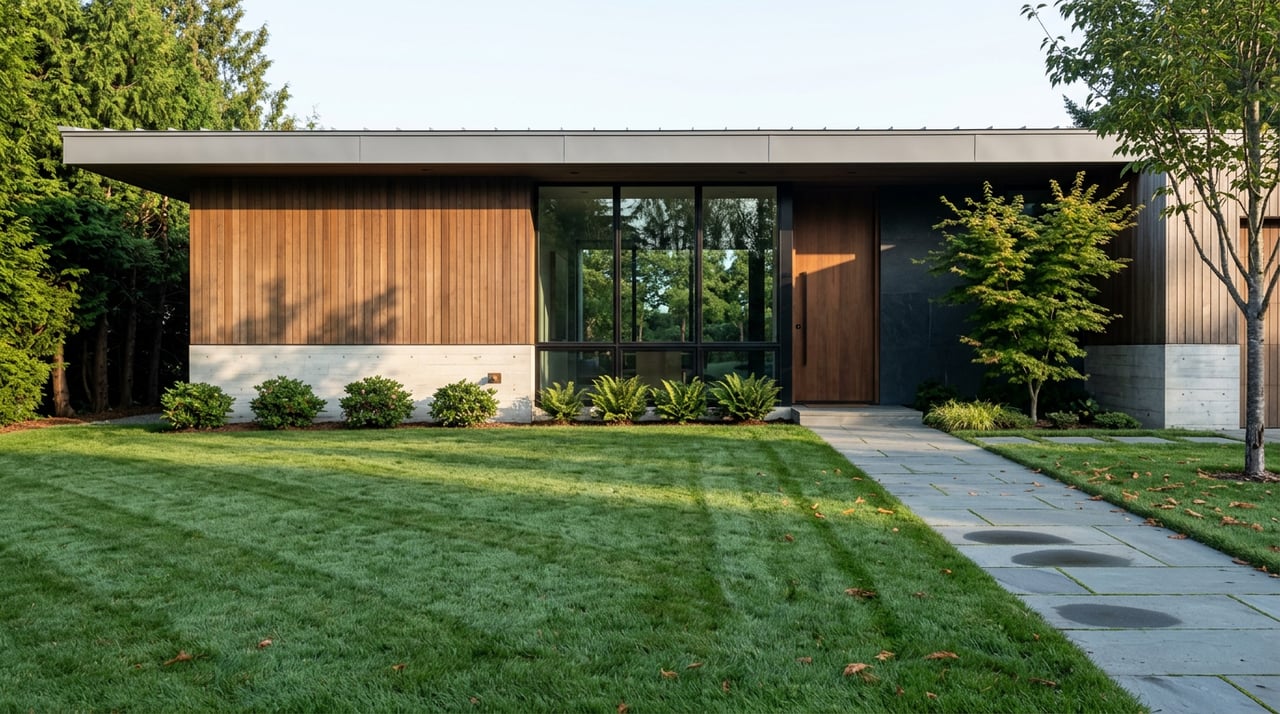
Elsewhere on the Eastside, in Sammamish, a house asking $2.9 million has been sitting for more than 100 days. The seller is now offering to help finance the buyer's purchase, according to reporting from the Seattle Times. A few doors down, a $2.2 million listing that has been on the market since April carries a new price scrawled in ballpoint pen on the yard sign: $2.09 million.
That scene is not an outlier. It is a symptom of something reshaping the entire Eastside luxury tier this year, and Clyde Hill is not exempt from it. Tech-sector layoffs tied to the AI buildout, new state tax exposure on high earners, and a buyer pool that has simply gotten warier are converging on exactly the demographic that has always underwritten Clyde Hill's market: senior tech executives and their families. The Seattle Times has documented this pattern across the Eastside broadly. The question worth answering here is what it actually looks like inside a market as small, as zoned-in, and as historically resistant to new supply as Clyde Hill.
The answer is not a crash. The median sale price can hold steady even as buyers become more selective.
What the Median Alone Can Miss
Clyde Hill closes a small handful of homes in any given month. When a market trades this thin, the median price tells you almost nothing about what an individual seller should expect, because one or two unusual transactions can swing it in either direction. A single $17 million estate closing skews the average. A single overpriced listing sitting untouched doesn't move the median at all, because it hasn't sold yet, it's just occupying a spot on the market while the clock runs.
That is the limitation. A seller who checks the median this fall and sees it holding steady, or even rising, can walk away with a false sense of security. The number that actually describes what is happening in Clyde Hill right now is not the median. It's the cancellation rate.
Public Northwest Multiple Listing Service filings show Clyde Hill logged just 14 listing cancellations in all of 2025. In the first six months of 2026 alone, that figure already reached 25, putting the city on pace to more than triple last year's rate. A cancellation is not a home that sold for less than hoped. It's a home that never sold at all, that a seller pulled off the market rather than keep discounting in public.
Alongside that, the sale-to-original-list-price ratio in Clyde Hill has slipped to roughly 93.5% this year. That means the average home that does sell is closing meaningfully below its first asking price, a gap that widens further for listings that linger past the 60 or 70 day mark.
What Actually Explains the Gap
The mechanism here is not mysterious once you connect it to who buys in Clyde Hill. This is not a market carried by first-time buyers or move-up families reacting to interest rates. It's a market carried almost entirely by senior executives, founders, and relocating professionals from Microsoft, Amazon, and the broader tech ecosystem, exactly the population now absorbing layoffs and rethinking large discretionary purchases.
Axios Seattle, citing Puget Sound Business Journal reporting, noted that home sale cancellations have risen across the region as buyers pull back amid economic uncertainty, even as Eastside listings surged by roughly 50% earlier this year. The listings kept coming. The buyers got choosier. Those two facts do not cancel each other out. They compound.
John Manning of RE/MAX, quoted in that same Axios coverage, put a blunt point on where the demand still lives: the wealthy are still buying, often in cash, and correctly priced homes in desirable neighborhoods move quickly.
"But it's not a good thing when only the wealthy can buy houses."
That line describes the entire Eastside luxury tier in 2026, and it describes Clyde Hill with unusual precision. This is a city where nearly everyone is, by any normal measure, wealthy. Even here, that comment holds. Demand hasn't vanished. It's become far more selective about what it rewards.
Two Very Different Years, Happening at Once
The clearest way to see this is to look at how differently two similarly priced Clyde Hill listings can perform in the same season, depending entirely on how they were priced and prepared at launch.
| Priced with the comps, staged, marketed correctly | Priced on hope | |
|---|---|---|
| Typical time to close in 2026 | Roughly three weeks | Approaching two months |
| What happens if it stalls | Multiple offers, sometimes over asking | Price cuts, then cancellation, then a lower relaunch |
Some Clyde Hill homes this year have sold in five days or less, occasionally above asking, proof that buyer appetite for the right property at the right number is fully intact. The homes struggling are not struggling because Clyde Hill has fallen out of favor. They're struggling because a seller priced against 2024 conditions in a 2026 market, and there was no wave of new demand behind them to bail out the mistake.
This bifurcation is not unique to Clyde Hill, but the region's broader numbers back it up. A Northwest Multiple Listing Service report covered by the Seattle Times in early August found Eastside pending sales down 16 to 17% year over year even as single-family listings climbed, and that King County's months-of-supply figure had reached its highest level in at least a decade. Brokers quoted in that coverage described a market where some homes sit for weeks while others draw bidding wars in the same neighborhood. Clyde Hill is a compressed, high-stakes version of exactly that dynamic.
The Structural Reason This City Can't Absorb a Slowdown the Way Others Can
Here is the piece that gets missed when people compare Clyde Hill to a typical suburb. Clyde Hill incorporated as its own town on March 31, 1953, specifically so residents could set a minimum lot size of 20,000 square feet and keep the commercial development transforming neighboring Bellevue from reaching the hill. That zoning has barely moved since. The city today remains almost entirely single-family, with only two small commercial exceptions on record, a gas station and a coffee shop.
That history matters more than it sounds like it should. In a growing suburb, a soft buyer season gets partly absorbed by builders slowing down, by new construction pausing, by supply naturally contracting to meet weaker demand. Clyde Hill has no version of that release valve. The lot count is fixed. The zoning hasn't allowed meaningful new supply in over 70 years. So when demand softens, even briefly, there's nothing on the supply side to cushion it. Every mismatch between what a seller asks and what a buyer will pay shows up directly in days on market and in the public price history of that specific listing, because there's no larger pool of new inventory to dilute it.
That is also why the quieter half of this year's story matters. Homes that sold privately in Clyde Hill this year, away from public MLS exposure, closed at their full original asking price, without the visible price-cut history that now functions as a warning sign to buyers watching the public market. In a city this small, where every relisted price is visible to anyone paying attention, discretion is not a luxury. It's a pricing strategy in its own right.
What This Means If You're Selling in Clyde Hill Now
None of this is a reason to wait. Clyde Hill's underlying scarcity, fixed by zoning decisions made in 1953 and never meaningfully reversed, is a long-term structural advantage that hasn't gone anywhere. What's changed is the margin for error. A listing that opens well above recent comparable sales doesn't quietly find its buyer anymore. It sits, it gets discounted in public, and by the time it sells, or comes off the market, everyone watching the price history knows exactly what happened.
The sellers doing well this year are the ones treating the first list price as the only price that matters, because in a market this thin, there may not be a second chance to make a first impression.
A Few Questions Worth Answering Directly
Does Clyde Hill's zoning mean new supply could loosen this up soon? Unlikely in any near-term sense. The 20,000 square foot minimum lot size and single-family zoning that shaped the city's 1953 incorporation remain largely intact today. Barring a change to the comprehensive plan, the number of buildable lots in Clyde Hill isn't going to grow the way it might in a less zoning-constrained suburb.
Is selling off-market the right move for every home here? No. It depends heavily on the property, the timeline, and whether the seller values speed and public exposure over discretion and a controlled process. What this year's data shows is that it's a real, viable option in Clyde Hill specifically, not a fallback for homes that couldn't sell publicly.
How unusual is a 25-cancellation first half, compared to a typical Clyde Hill year? Against 14 cancellations for all of 2025, it's a meaningful shift, not a rounding error. It's the clearest early signal available this year that pricing precision matters more than it has in recent seasons.
If you're weighing when and how to bring a Clyde Hill property to market, or you're trying to make sense of what a specific comparable sale actually means for your own timeline, that's a conversation worth having before a listing goes live, not after it's already sat for 60 days. Patricia Wallace works directly with Clyde Hill sellers, one principal, one conversation, to build a pricing and marketing strategy that fits the market as it actually is right now. Contact Patricia directly for a private consultation.
This article is general information, not legal, tax or financial advice. Consult a qualified professional about your situation.